
Grocery vouchers generally help families more because they offer dignity, flexibility, and support for the local economy, allowing households to choose culturally appropriate items they need for Iftar and Suhoor that pre-packed parcels often lack. When deciding on the best method, it is important to understand when Zakat is eligible for food relief to ensure your contribution meets Shariah requirements.
Quick Facts: Evaluating Food Relief Models
- Choice and Dignity: Vouchers allow recipients to select their own food based on family size and dietary needs.
- Economic Multiplier: Digital programs can boost local GDP by circulating funds within local markets.
- Logistical Efficiency: Vouchers reduce costs related to storage, transportation, and spoilage.
- Emergency Reliability: Food parcels are superior in conflict zones where markets have collapsed.
Food Voucher vs Parcel: Understanding the Key Differences
When discussing the food voucher vs parcel debate, we are essentially looking at the difference between “choice-based relief” and “supply-based relief.” Both methods have served the Ummah for decades, particularly during the Ramadan season when the need for food security peaks.
The Case for Grocery Vouchers
Digital grocery vouchers empower recipients through choice and dignity. Rather than receiving a rigid parcel, a mother can select the fresh milk or proteins her family specifically needs to sponsor Iftar meals in her own home. Vouchers also slash overhead by removing the need for warehouses. Most importantly, a charity voucher program supports the local economy by keeping funds within the community.
The Case for Food Parcels
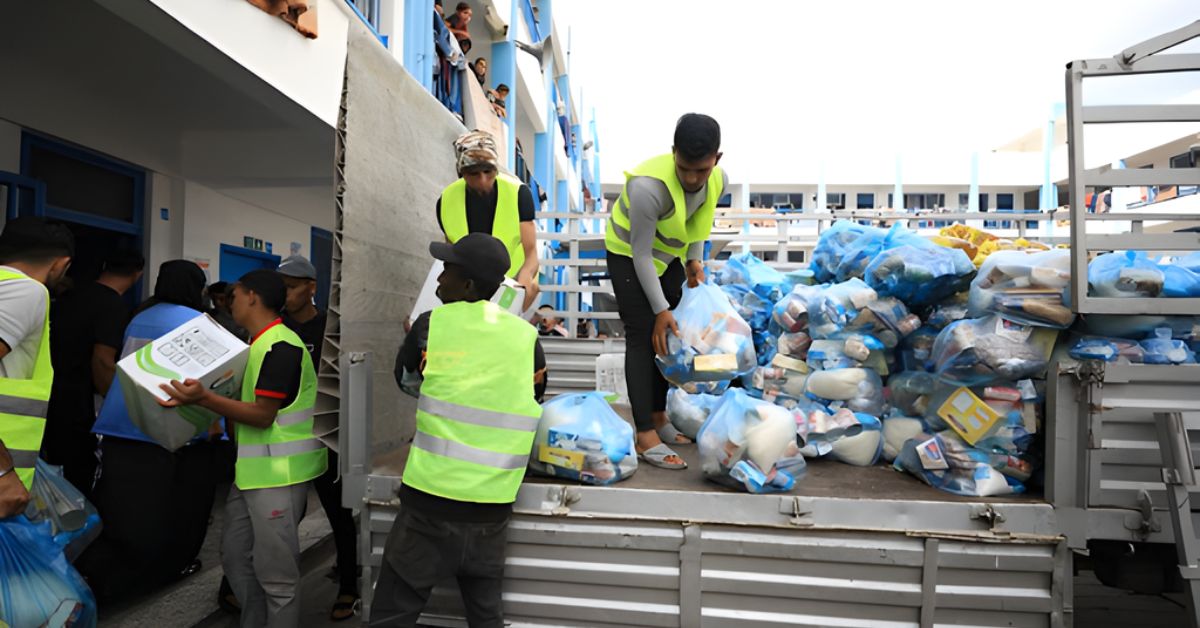
Conversely, food parcels are the “gold standard” for absolute emergencies. In a scenario where a flood has washed away the local market, a voucher is useless. In these moments, physical food parcels guarantee that life-saving staples reach the hungry. This reliability is a core part of the Amanah (trust) we hold to ensure your aid is delivered regardless of the circumstances.
The Best Way to Donate Food: Context Matters
Deciding on the best way to donate food requires a deep understanding of the “informal settlement” dynamic. In many regions, the problem isn’t a lack of food in the shops; it is a lack of money in the pockets of the residents.
For every dollar injected into a low-income household via vouchers, the local GDP can see a boost of $2.60. A single Zakat donation effectively works twice: once to feed a family, and once to stabilize a local business. This model is often funded by those who are unable to fast and choose to fulfill their compensatory duties through food aid.
How a Charity Voucher Program Transforms Relief
A modern charity voucher program utilizes technology to deliver digital currency rapidly to the phones of those in need. This level of transparency encourages more donors to give, knowing their money isn’t being lost to logistical waste. You can see the real-world results of these different models in our volunteer diaries, which document the challenges and successes of on-the-ground distribution.
To ensure your contribution is calculated correctly for these programs, we recommend using a Zakat calculator to determine your total obligation before the month begins.
FAQ: Common Questions About Food Relief
Is it better to give a food parcel or a voucher during Ramadan?
For urban environments, a voucher program is better for dignity. In remote or war-torn areas, a food parcel is safer. Both are valid ways to fulfill your Zakat al-Fitr obligation.
Can I use my Fidya or Kaffarah for these programs?
Yes. Whether you are paying Fidyah for health reasons or Kaffarah for a broken fast, these funds are directly used to provide meals. You can also pay these after Ramadan if you missed the initial window.
Do these programs help those with specific exemptions?
Yes, food relief often reaches those who are exempt from fasting but still wish to contribute to the spiritual atmosphere of the month by feeding others.
Conclusion
While food parcels are vital for sudden disasters, grocery vouchers offer a superior, dignified solution for long-term support. By empowering families to choose their own meals, we create a stronger, more resilient Ummah. The choice depends on context, but the goal remains universal: relief.